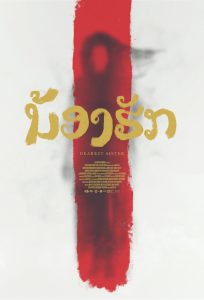



Film Scholar and critic, Author of 3 books on Israeli Cinema and has a passion for teleporting which he can't currently pursue for lack of proper technology.
The world of cinema has been introduced to Mattie Do in the past few years as the first female film director out of Laos. However, there is a great disservice made with this honor.
Few in Israel, and abroad, have heard of Laotian cinema, since the Laotian film industry had only begun forming in 2008, beforehand there was not much Laotian cinema. During this period, the socialist-totalitarian regime of Laos decided to direct funds to the field. Do found herself in a unique cinematic opportunity, in the heart of the industry, at the right place and time when the state was looking for professional stakeholders to establish the industry. Mattie Do made her first film in 2011, so she is not only the first Laotian director but also one of the pioneers of Laotian cinema in general, and the one who has brought Laos the most recognition and prestige in the international arena so far (her third film, The Long Walk, was the first submitted by Laos for the Foreign Film Award of the American Film and Television Academy.) Do became a producer, producing for herself and others.
We highly recommend watching the conversation we had with Mattie Do (and her co-producer, Annick Mahnert) and discover the unique story of her evolution into filmmaking.

First row, right to left: Pablo Otin, Uri Aviv, Anick Mehanerert. Second row, right to left: Eitan Gafni, Matti Do, Yuval Adar
The most striking thing about Do’s cinema is perhaps the fact that all three of her films so far fall under the category of horror films, but to place them in one genre category or another is a disservice to their distinct uniqueness, which led them to be accepted into major film institutions such as the Venice and Toronto Film Festivals. Her films are indeed all ghost stories, and all include elements of horror (and a medley of other genre elements – from time travel to dystopian technological retro-futurism), but they break genre definitions and frameworks, while providing a sensations of intimate, slow and spiritual arthouse dramas.
Dance of the Spirits
The inspiration for the unique way in which Do deals with ghosts originated from two prominent sources. Ballet and Laotian culture. Do’s journey in artistic craft began in dance and with her training and experience as a ballet dancer. She grew up in the USA, studied and performed in many places as a ballet dancer. Her connection to dance and the way ghost stories are told in ballet performances is prominently present in her films. In quite a few ballet works, the dead and the living dance side by side in harmony but also violently, and in constant tension with each other. Thus also the characters in Mattie Do’s cinema. The appearance of the ghosts is on the one hand “natural”, self-evident. It is clear that there are ghosts and that they communicate with us. Sometimes there is even something friendly about them. On the other hand there is the constant threat of the stranger, the dead, the avenger, the outcast, the spirit that does not rest in peace and needs the living to realize some kind of action in order to be liberated or arrive at a place of tranquility.
In the conversation we had with her, Mattie Do says that in Laotian culture there is a natural relationship with ghosts. The spirits can be of family or close people who simply remain in the world even after their death, and people can feel them, see them. They live (-die) among us. A perception that creates comfort in many ways. Mattie Do adds that talking about a ghost is seen as something not unorthodox in Laos, as a cultural issue. Of course, such a concept also exists in the West, but it is much more repressed and shows up mainly in fantasy stories and the like.

A photo from Chanthaly, Do’s debut film, 2012
The Horror in Family
Do’s cinema is also a low-budget, small, intimate, chamber cinema. It usually deals with a few characters in a relatively limited space, and explores the way in which each of the characters changes, develops, and the relationships between them. In fact, Do’s films are all family films: relationships between father and daughter, son and mother, cousins who call each other “sister” and the like.
In many ways, Do’s films deal with the horror of family ties. In Do’s films, the horror comes from the family relationships themselves. The family relationship is the source of anxiety, fear, violence, tension, and suspicion. But at the same time, the family is also the one that saves us from all these feelings and gives us feelings of love, belonging and support.
On a deep psychological level, Do’s films are a psychological analysis of the complexity of family relationships and how paradoxically, in limited and suffocating familial spaces of the home, safe spaces are also created, which protect us from all harm and which we also always long, or yearn for. Therefore, in her films, as in almost every good horror film, it is actually difficult to identify who the real “monster” is, who we are supposed to be afraid of and who is actually protecting us. Things get mixed up and turned upside down. Does the threat come from the ghost? From a family member? From someone else entirely? Do we identify with the savior or the murderer?
Eventually, at the center of Do’s films is an honest emotional-psychological world. At the heart of her films is often the simple and deep desire to talk to family members, to be close to them, and feel their presence, whether they are alive or dead. But this desire is also spiked with anxiety and horror. Mattie Do’s life story contributes a lot to understanding the emotional depth of this dimension in her films. Because Do lost her mother when she was in her 20s and actually returned to Laos out of concern for her father, and has lived there ever since.
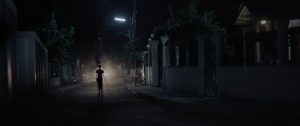
A photo from Dearest Sister, Do’s second film, 2016
Slow Pace is the Pace of Horror
Perhaps the most challenging element about Mattie Do’s work is the slow pace. Do does indeed make horror films, but as mentioned, she makes them in the context of art cinema that breaks familiar and conventional structures. Towards the end of each of her films we will discover some new piece of information, a plot twist will be discovered, or a new narrative element will be formed in relation to the character that will add another emotional and philosophical layer to the film, a layer of understanding and wisdom will be added to the story. But to get there, Do takes her time. She observes her heroes, investigates their gazes, the way they sit, move in space, walk, stand, and fear (and in this context, too, the connection to ballet is of course essential. Do does not treat lightly the postures and delicate movements of the hands, head, or body). The connection between the production’s lack of resources and the fact that the film “takes its time”, may make it difficult to watch, but two interesting things happen in this context.
First is that in fact, despite the slow pace, a lot of information is being revealed all the time. Things consistently happen and unfold. There is a kind of gap in the film between information that is constantly flowing and the presentation of this information in a routine, sometimes anti-dramatic way. As if there was a gap between the intensity of the events that happen in the film and their everydayness. Ghosts appear, family secrets are revealed, people around are suspected of malicious plots, paranoia can envelop any scene with the feeling that characters are lying or hiding things – and yet, everything is presented in a calm, meditative, slow manner.
Sometimes Do does the opposite and makes complete dramatic moves very quickly. An example of this can be found in her second film Dearest Sister. The film is about a heroine who comes from a small village to take care of her cousin in the city. At the beginning of the film, against the background of a conversation between the two heroines, Do makes a kind of montage of how the heroine from the village fits into the life of the new urban house, where she has just arrived, and its strangeness. Another director would have given the scene 15 minutes, Mattie Do presents in a minute and with brilliant conciseness and precision. From here we learn that the pacing itself is a conscious choice, Do knows how to tell stories in a rhythmic and effective way when she means to, and sometimes does, and yet, she prefers the slow warm-up, bringing her films to a simmer over low heat.
Also derived from the slow pace is the idea that, in fact, this is the pace of horror. When we talk to someone and tell them something that happened to us, as soon as we slow down the rate of speech, immediately automatically, we will create an aesthetic response to this slowing down associated with tension, like writing an ellipsis…. Therefore, the same story can be told at a fast pace, but as soon as you slow down, horror starts seeping in. Therefore, in many ways, a slow pace is the pace of horror – and thanks to this slowness, Mattie Do succeeds in creating a gentle scary atmosphere (as mentioned, over low heat), throughout the entire film. And so, something that can be experienced as oppressive in the bad sense of the word – oppressive as in “stuck”, “not progressing”, etc., can be experienced as “oppressive” in the aesthetic, experiential, positive sense. In other words, Mattie Do’s films can produce a refined and directed existential anguish precisely thanks to their slowness.
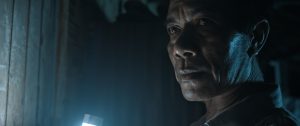
A photo from The Long Walk, Do’s third film, 2019, nominated for Laos (the first ever) for the Foreign Oscar, premiered at the Venice Festival
Poverty Porn
Another and last point I will raise here regarding the cinema of Mattie Do, and it is perhaps the most basic and related to genre films and our expectations (viewers and moviegoers from all over the world) of non-Western films and countries of the Global South. Mattie Do criticizes these expectations both in the interviews she gives and in the conversation we conducted. According to her (and I agree with her), in the institution of major international festivals and of art cinema, there is often a system that fetishizes poverty or those perceived as “exotic” by “the West”. This expectation is for the cinema to provide some kind of “authentic” image of the place it comes from, when this image is based on the description of the village life and the poverty and simplicity of the locals. Mattie Do rebels against these expectations.
Do says that although there are people who live like this, in the Global South in general, and in Laos in particular, but when she suffered criticism that the description of city life in Laos is in fact an “inauthentic” description of her country – it lit a red light of rage in her and immediately raised the question of what is authentic and who defines authenticity. What are Western creators allowed to do that people from poor and underprivileged countries are not allowed to do. This can be paralleled to expecting Israeli films to deal with the conflict, the army, the Holocaust, or the religious world and to reduce Israeliness to a caricature of the exoticism these subjects bring. In fact – this exoticism is perceived as Israeli authenticity by the world.
In the context of Mattie Do, she fit in well at the genre film festivals where this expectation is less dominant, but she very quickly moved to art film festivals as well. The zigzag between the two worlds allows her to make her films very freely. She makes artistic genre films, and is not willing to give in to the exotic expectations of her. She manages to make “authentic” films that are rooted in Laotian culture, language and society, while at the same time avoiding playing the game of turning its culture into an exotic caricature for Western eyes.
In her third film The Long Walk, Mattie Do began the project as a form of defiance against these expectations of her – what she calls in her words “third world poverty porn” – and the reference is to the erotic-ideological pleasure that these types of films bring to the Western bourgeoisie. The film itself begins with a villager in Laos living in his hut in the wild. But very quickly it turns out to be a movie set in the future (science fiction) where the man travels through time and communicates with spirits. And so Mattie Do supposedly lives up to the expectations, but at the same time mocks them and dismantles them.
All of Mattie Do’s films are unique, and although there are throughlines and motifs, each of them is unique in its own way. The spotlight program about Mattie Do at the Utopia 2020 festival is a rare opportunity to get to know surprising, fundamentally different and mesmerizing cinema and to discover a valued and exciting filmmaker.